
СASHFLOW
Torn Screen EntertainmentEducational
4.0201.00 Reviews
- Version
- 2.0.31
- Installs
- 100.00K
- Age Rating
- Everyone
Screenshots



Our Review of СASHFLOW
 Analysis by Appyee
I came to СASHFLOW expecting a money-themed game, and found an experience that asks me to think through financial choices rather than simply memorize terms. It is best approached as a way to explore how income, expenses, debt, and investing can interact—not as a source of personal financial advice. That distinction makes the game more useful: I can try a decision, see how it affects my position, and learn without treating the outcome as a recommendation for my real-life finances.
For a first-time player, the reassuring part is that I don’t need to know investing vocabulary before I begin. The game gives its ideas a practical setting, so unfamiliar concepts have a purpose as I play. I’d set aside time to pay attention to the choices instead of tapping through quickly; the learning comes from noticing why one move helps or hurts, not merely from reaching the next turn.
Getting Started with the Game
So, what's the deal with СASHFLOW? It's based on the popular board game by Robert Kiyosaki, aimed at teaching financial literacy through interactive play. When I first downloaded it, I wasn't sure what to expect. Was it a game? A budgeting tool? Turns out, it's a little bit of both, wrapped up in an engaging package that makes learning about money management a breeze.
Setting up the app was straightforward. After creating an account, I was greeted with a colorful interface that promised a mix of education and entertainment. The app walks you through the basics of balancing income and expenses, investing wisely, and understanding the impact of financial decisions on your overall wealth. All this while trying to get out of the "rat race" and into the "fast track." Pretty intriguing, right?
The practical first step is to treat the opening decisions as a baseline, not a test you have to ace. I’d read each option carefully, especially when it involves taking on a commitment or changing the balance between income and expenses. A useful habit is to pause after a choice and ask myself what changed: did I gain income, take on an obligation, or leave myself with less room for the next surprise? That small check turns a turn-based decision into a lesson I can remember.
Diving into Gameplay
Now, let’s talk about the gameplay. It's all about strategy here. You start with a character profile, complete with a career, salary, and expenses. My virtual self was an engineer with a decent salary but hefty student loans. Relatable, much?
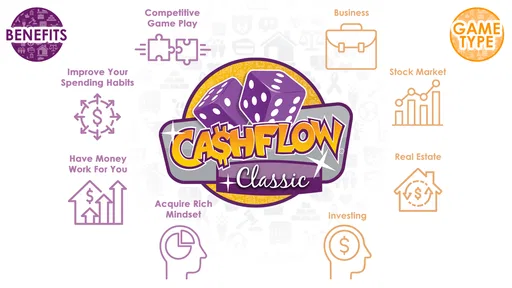
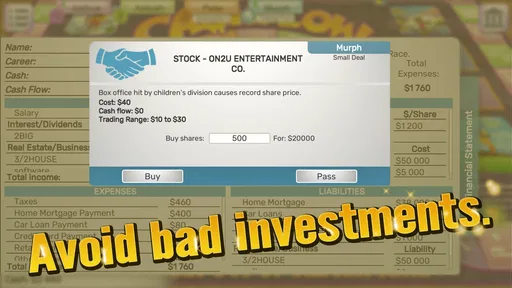
The objective is to increase your cash flow through smart investments and strategic financial decisions. Each round presents opportunities to buy stocks, invest in real estate, or start a business. The choices are designed to mimic real-life scenarios, which I found both challenging and incredibly rewarding once I made the right moves.
What I loved was the unpredictability. Just like life, the game throws curveballs—unexpected expenses, market shifts, and economic downturns—that force you to adapt quickly. It's a fantastic way to learn resilience in financial planning.
That unpredictability also gives the game a useful second-reading quality. If an early run goes badly, I can look back at the chain of decisions instead of assuming a single unlucky event explains everything. I’d pay attention to whether I left enough breathing room for a setback, and whether an appealing opportunity actually fits the character’s financial position. The point is not to find a guaranteed winning formula; it’s to notice how risk and available cash shape the choices I can make later.
A realistic way to use it is as a short evening activity with a friend or family member: take turns explaining why you’d choose an opportunity, then compare the reasoning when circumstances change. That makes the game more conversational than a solo quiz. It can also help a parent or teacher introduce money concepts to a beginner, provided the conversation makes clear that game outcomes simplify real financial decisions.
Educational Value
While the gameplay is engaging, the real magic of СASHFLOW lies in its educational value. I found myself learning about financial concepts that I had previously glossed over. Terms like "passive income," "capital gains," and "debt management" became more than just buzzwords; they became tools for winning the game.
The app includes tutorials and tips that break down complex financial jargon into digestible pieces. For someone like me who doesn't have a background in finance, this made a huge difference. Plus, there's a community feature where players can share strategies and insights, adding a social learning element that I found quite motivating.
For a new player, I’d use the explanations as prompts to investigate a concept, not as a complete lesson in how it works outside the game. A term such as passive income is easier to remember when it is tied to a decision, but the simplified setting can’t capture every tax, legal, or personal circumstance involved in actual investing. The strongest takeaway is the habit of asking what a choice does to cash flow and obligations—not copying a move into a real portfolio.
The social element can make it easier to compare approaches, but I’d keep the discussion grounded in reasoning. Instead of asking only which player made more progress, ask what trade-off each person accepted and what they might do differently after a setback. That turns shared play into a learning exercise. If you prefer to study privately, the core appeal still comes from working through the game’s choices; the community is an extra, not a reason everyone has to participate.
Design and Usability
Let’s talk aesthetics and user experience. The design is sleek and intuitive, with vibrant colors and crisp graphics that make navigation a breeze. I appreciated the attention to detail—everything from the layout to the animations felt thoughtfully crafted.
Usability-wise, the app runs smoothly on both Android and iOS. I didn't encounter any glitches, which is always a plus in my book. The developers clearly put a lot of effort into ensuring a seamless experience across devices.
One point worth checking before installing is basic compatibility: the game’s current version is 2.0.31 and it requires Android 6.0 or later on Android devices. It is a paid game at $2.59, so I’d decide whether its learning-through-play approach suits me before buying rather than expecting a free budgeting utility. The age rating is Everyone, which makes it accessible for a broad audience, though younger players may benefit from an adult helping connect the game’s money ideas to everyday examples.
Compared with a spreadsheet or a standard budgeting app, this is much more interactive but less suited to tracking my actual household finances. A spreadsheet gives me direct control over real numbers; a budgeting tool is better for recording spending and monitoring a plan. This game’s advantage is that it gives me a low-stakes place to reason through choices and consequences. If my main goal is to manage bills, build a budget, or research a real investment, I’d choose a purpose-built tool instead.
Who Will Get the Most from It
I’d recommend this to curious beginners who want a more active introduction to money concepts than reading a glossary, and to families or small groups looking for a conversation starter about financial choices. It can also suit someone who already knows the basic vocabulary but wants to test how they think about cash flow under changing conditions. The key is enjoying strategy and being willing to reflect on decisions rather than treating every turn as a race.
It is less suitable for anyone who wants a realistic trading simulator, individualized investment guidance, or a tracker for income and expenses. Experienced investors may find the educational framing too simplified, while players who dislike planning and weighing trade-offs may prefer a faster, less analytical game. I’d also skip it if I only need an immediate answer about a real financial decision; a game cannot assess my personal circumstances.
The developer is Torn Screen Entertainment, and the game has an average rating of 4.0 from around 3.2 thousand ratings, with over 100 thousand installs. Those figures suggest that plenty of people have tried it, but I’d weigh them less heavily than the fit between the game’s style and what I want to learn. For me, the deciding question is whether I’m in the mood to think through money choices as play.
Final Thoughts
After spending some quality time with СASHFLOW, I can confidently say it’s more than just a game. It’s a tool that challenges you to think critically about your financial habits while having a good time. Whether you're a finance newbie or a seasoned investor, there's something here for everyone.
If you're looking to up your money game in a fun and interactive way, give СASHFLOW a try. Who knows, it might just be the push you need to start making smarter financial decisions. Happy investing!
My most useful tip is to replay the experience with a different decision-making approach: first prioritize keeping options open, then try to pursue opportunities more aggressively. Comparing the reasoning can reveal whether I was reacting to the latest event or following a plan. I’d also avoid judging the game by a single lucky or unlucky run; the learning is in seeing how choices accumulate and where flexibility matters.
Released on December 20, 2018, this educational game has had time to establish its own niche between entertainment and money education. I’d treat it as a thoughtful introduction rather than a complete course. If that is what I want—an approachable way to practice financial decision-making without putting real money at stake—the price feels easier to justify. If I want precise, personalized instruction, a qualified adviser or a focused learning resource is the better next step.
Verdict
Strengths of СASHFLOW
- Intuitive interface for easy navigation.
- Comprehensive financial tracking features.
- Customizable goals and budgeting tools.
- Syncs across devices for seamless access.
- Engaging tutorials for beginner users.
Limitations of СASHFLOW
- Requires a paid subscription for full features.
- Limited integration with external apps.
- Occasional sync issues reported by users.
- No offline mode available for tracking.
- User interface can feel cluttered at times.
Similar Picks in This Category
View All
Little Panda Policeman
BabyBus4.0

Monster Trucks Game for Kids 2
Raz Games4.1

Little Panda's Chinese Recipes
BabyBus4.4

Little Panda's Restaurant
BabyBus4.4

Little Panda's Ice Cream Games
BabyBus4.3

Baby Panda Care
BabyBus3.8
Frequently Asked Questions
What is the main purpose of the СASHFLOW app?
The СASHFLOW app is designed to help users manage their finances by tracking income, expenses, and investments. It aims to provide a comprehensive overview of one's financial health, offering tools for budgeting and financial planning. The app is inspired by financial literacy games and educational methods.
Is СASHFLOW suitable for beginners in financial management?
Yes, СASHFLOW is user-friendly and suitable for beginners. It offers tutorials and guides to help new users understand basic financial concepts. Additionally, it provides simple tools to set up budgets, track spending, and visualize financial goals, making it accessible to those new to financial management.
Does СASHFLOW offer any educational features?
Absolutely, СASHFLOW integrates educational content to enhance financial literacy. It includes interactive lessons and tips on budgeting, investing, and saving. The app's gamified approach helps users learn financial concepts in an engaging and practical manner, making it a valuable resource for continuous learning.
What platforms is СASHFLOW available on?
СASHFLOW is available on both Android and iOS platforms. The app can be downloaded from the Google Play Store for Android users and the Apple App Store for iOS users. It ensures compatibility across a wide range of devices, allowing users to manage finances on the go.
Are there any costs associated with using the СASHFLOW app?
СASHFLOW offers a freemium model, where basic features are available for free. However, for advanced features and ad-free experiences, users may opt for in-app purchases or subscriptions. The app is transparent about its pricing, allowing users to choose the best plan for their needs.
Play our best games!


